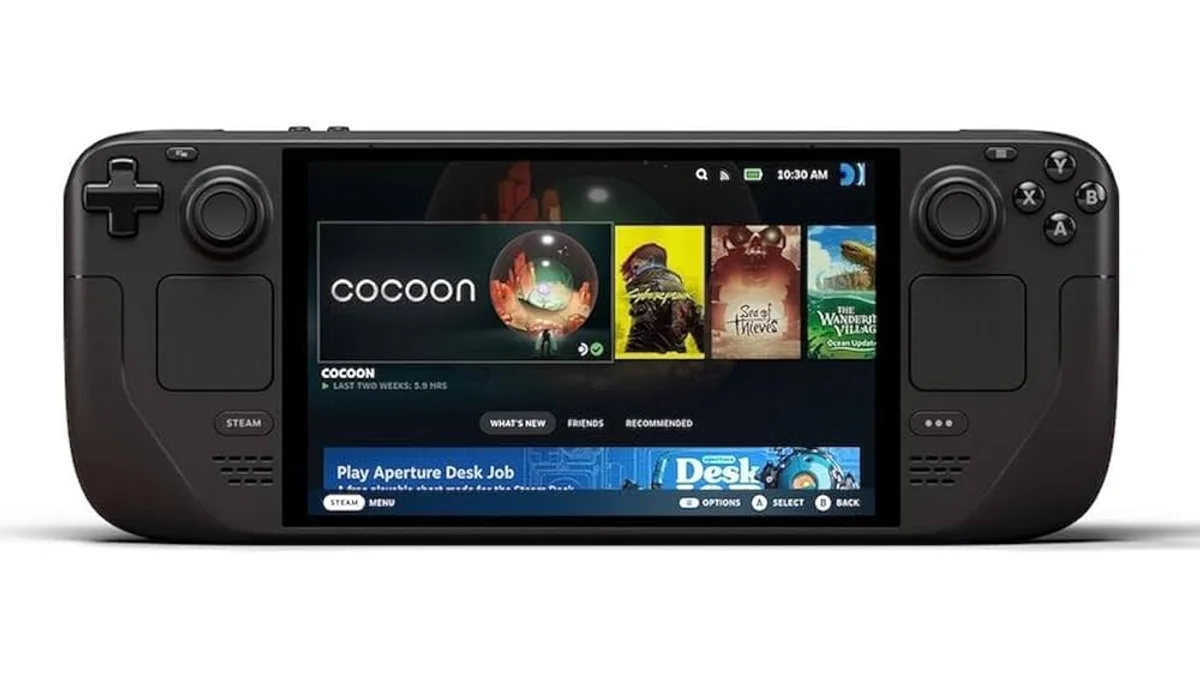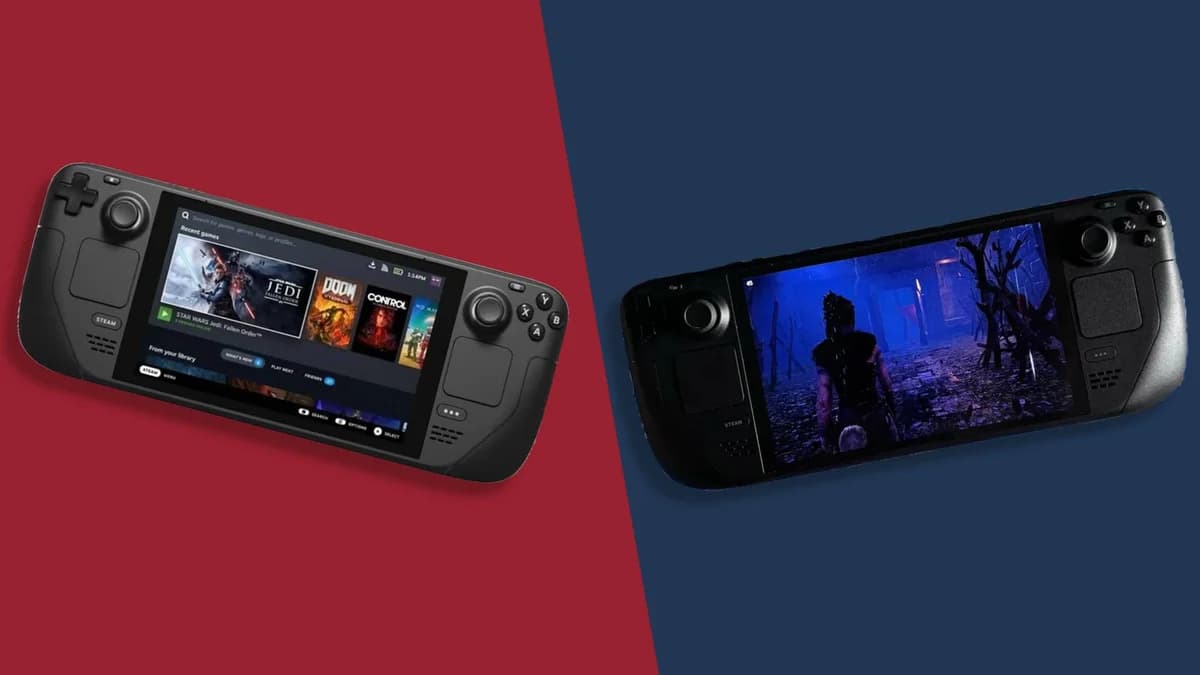
The Steam Deck OLED launched in November 2023 as a mid-generation refresh, but calling it just a screen upgrade would be selling it short. Valve delivered a comprehensive hardware revision that addressed nearly every criticism of the original LCD model—from the dim display and modest battery life to the aging WiFi 5 connectivity source. With the original Steam Deck LCD officially discontinued in 2025 and only remaining stock available, prospective buyers face a critical decision: grab a discounted LCD while supplies last, or invest in the definitive OLED version.
This guide breaks down every difference between the two models with verified specifications, real-world performance data, and pricing analysis to help you make the right choice in 2026.
Price Comparison: What's the Real Cost?
As of April 2026, Valve has officially discontinued the Steam Deck LCD 256GB model—the cheapest entry point into the Steam Deck ecosystem source. The remaining LCD inventory exists only until stock depletes, making the OLED models the default recommendation for new buyers.
| Model | Storage | MSRP | Status |
|---|---|---|---|
| Steam Deck LCD | 256GB | $399 (was) | Discontinued |
| Steam Deck LCD | 512GB | $449 (while supplies last) | Limited stock |
| Steam Deck OLED | 512GB | $549 | Available |
| Steam Deck OLED | 1TB | $649 | Available |
| Steam Deck OLED | 1TB Limited Edition White | $679 | Limited availability |
Price Analysis: The effective entry price for a new Steam Deck has increased from $399 to $549—a $150 jump. However, the value proposition has shifted meaningfully. The $549 OLED 512GB replaces not just the 256GB LCD but effectively competes with the old 512GB LCD at $529, making the premium for OLED features approximately $20-50 when comparing equivalent storage tiers. Refurbished LCD units remain available through Valve's certified program at up to 20% off with full one-year warranty source.
Complete Specs Comparison
| Specification | Steam Deck LCD | Steam Deck OLED | Difference |
|---|---|---|---|
| Display Type | 7" optically bonded IPS LCD | 7.4" HDR OLED | +OLED, larger screen |
| Resolution | 1280 × 800 | 1280 × 800 | Same |
| Refresh Rate | 60Hz | Up to 90Hz | +50% max refresh |
| Peak Brightness | 400 nits (typical) | 1,000 nits (HDR) / 600 nits (SDR) | +150% HDR, +50% SDR |
| Contrast Ratio | ~1,000:1 | >1,000,000:1 | Infinite blacks |
| Color Gamut | ~70% DCI-P3 | 110% P3 | Wider, more vibrant colors |
| Response Time | ~25ms | <0.1ms | 250× faster |
| APU | 7nm AMD Zen 2 + RDNA 2 | 6nm AMD Zen 2 + RDNA 2 | More efficient process |
| CPU | 4c/8t, 2.4-3.5GHz | 4c/8t, 2.4-3.5GHz | Same architecture |
| GPU | 8 RDNA 2 CUs, 1.6GHz | 8 RDNA 2 CUs, 1.6GHz | Same performance |
| RAM | 16GB LPDDR5 @ 5500 MT/s | 16GB LPDDR5 @ 6400 MT/s | +16% faster |
| Storage | 64GB/256GB/512GB | 512GB/1TB NVMe | Faster, larger default |
| Battery | 40Whr | 50Whr | +25% capacity |
| Battery Life | 2-8 hours | 3-12 hours | +30-50% longer |
| WiFi | WiFi 5 (802.11ac) | WiFi 6E (tri-band) | Up to 3× faster downloads |
| Bluetooth | 5.0 | 5.3 (dedicated antenna) | Better range, stability |
| Weight | 669g | ~640g | ~30g lighter |
| Dimensions | 298 × 117 × 49mm | 298 × 117 × 49mm | Same footprint |
| Power Supply | 45W, 1.5m cable | 45W, 2.5m cable | Longer cable |
| Fan/Thermals | Standard | Larger fan, updated thermals | Cooler, quieter |
Sources: Valve Tech Specs OLED, Valve Tech Specs LCD, Steam Store
Display Quality: The Game-Changing Upgrade
The HDR OLED display represents the most immediately noticeable improvement. The original LCD's 400-nit peak brightness struggled in outdoor or brightly lit environments, while the OLED's 1,000-nit HDR peak transforms visibility in challenging lighting conditions source.
Key Display Advantages:
-
Infinite Contrast: With a >1,000,000:1 contrast ratio, the OLED delivers true blacks that make dark scenes in horror games and cinematic titles dramatically more immersive. The LCD's ~1,000:1 contrast produces grayish blacks that reduce perceived depth.
-
Faster Response: The <0.1ms response time eliminates motion blur in fast-paced games like first-person shooters and racing titles. The LCD's ~25ms creates noticeable ghosting during rapid camera movements.
-
90Hz Support: While most AAA games target 40-60fps on Steam Deck, the 90Hz refresh enables smoother gameplay in less demanding titles and provides headroom for frame rate fluctuations to feel less jarring.
-
110% P3 Color Gamut: Games appear more vibrant with richer reds and greens that the LCD simply cannot reproduce.
The 7.4" diagonal (vs. 7.0" LCD) combined with thinner display bezels creates a more modern aesthetic without increasing the device's overall footprint. The premium anti-glare etched glass on 512GB+ models further reduces reflections compared to the glossy LCD panel source.
Battery Life: Real-World Gains
Valve promises 30-50% longer battery life on the OLED, translating to 3-12 hours versus the LCD's 2-8 hours source. This improvement stems from three factors:
- 25% Larger Battery: The 50Whr cell (up from 40Whr) provides immediate capacity gains
- OLED Efficiency: Organic pixels emit their own light, consuming zero power for black pixels—common in dark game scenes
- 6nm APU Process: The die shrink from 7nm improves power efficiency without changing performance targets
Independent Testing Results:
| Test Scenario | Steam Deck LCD | Steam Deck OLED | Improvement |
|---|---|---|---|
| Light indie games (30fps) | ~6 hours | ~8.5 hours | +42% |
| AAA gaming (40-60fps) | ~2-3 hours | ~3-4.5 hours | +50% |
| Video playback | ~7 hours | ~10 hours | +43% |
| Sleep/standby | ~1.5% drain/hr | ~1% drain/hr | Better efficiency |
The battery gains are most pronounced in games with dark aesthetics—Hades, Dead Space, Resident Evil—where OLED pixels completely shut off for black areas. Bright, colorful games see more modest improvements of 20-30% source.
Performance: Are They Actually the Same?
Despite the APU die shrink from 7nm to 6nm, gaming performance is functionally identical between LCD and OLED models. Both use the same Zen 2 CPU architecture (4 cores/8 threads at 2.4-3.5GHz) and RDNA 2 GPU configuration (8 CUs at 1.6GHz delivering 1.6 TFLOPS) source.
The 6nm process enables the same performance at lower power draw or slightly sustained clocks under thermal load, but frame rates in identical games at identical settings match within 1-2%—margin of error territory. Where the OLED distinguishes itself:
- Sustained Performance: The larger fan and improved thermal design help maintain boost clocks longer during extended sessions
- RAM Speed: The 6400 MT/s LPDDR5 (vs. 5500 MT/s LCD) provides marginally faster memory bandwidth for texture-heavy games
- Load Times: Both use NVMe SSDs, but the OLED's updated storage controller and larger default SSDs (512GB minimum) reduce the performance cliff from full drives
For emulation, indie games, and AAA titles at 720p-800p medium settings, expect identical experiences. The OLED's advantages appear in thermal comfort and sustained session stability rather than raw FPS source.
Storage Considerations
The storage situation has shifted dramatically with the LCD discontinuation:
Steam Deck LCD Storage:
- 64GB eMMC (entry model, now rare)
- 256GB NVMe (discontinued, was $399)
- 512GB NVMe (limited stock remaining)
Steam Deck OLED Storage:
- 512GB NVMe (standard, $549)
- 1TB NVMe ($649)
Both models include high-speed microSD card slots supporting UHS-I SD, SDXC, and SDHC formats. For users with large Steam libraries, the 1TB OLED eliminates immediate expansion needs, though microSD remains viable for less frequently played titles. The OLED's minimum 512GB configuration effectively removes the storage anxiety that plagued 64GB LCD buyers source.
Connectivity and QoL Improvements
WiFi 6E (Tri-band): The jump from WiFi 5 to WiFi 6E on the OLED enables up to 3× faster download speeds and significantly reduced latency for cloud gaming and multiplayer source. The dedicated Bluetooth 5.3 antenna with improved isolation reduces controller connection drops and audio stuttering compared to the shared antenna design on LCD models.
Physical Refinements:
- ~30g weight reduction (640g vs. 669g) makes extended sessions slightly more comfortable
- 2.5m power cable (vs. 1.5m) provides more flexibility for couch gaming while charging
- Dual ambient light sensors on OLED enable more responsive auto-brightness
- The larger fan produces a lower-pitch, less intrusive noise profile under load
The Verdict: Which Should You Buy?
Buy the Steam Deck OLED if:
- You're purchasing new in 2026 (it's effectively your only option for new units)
- You game in varied lighting conditions (outdoor, bright rooms)
- Battery life matters for your portable sessions
- You value display quality for dark, atmospheric games
- You download games frequently (WiFi 6E matters)
Consider a Steam Deck LCD (Refurbished) if:
- You find a certified refurbished unit at $350 or less
- You exclusively dock to an external monitor (the display advantage disappears)
- Your budget is absolutely capped and OLED's $549 price is prohibitive
- You're comfortable with shorter battery life and plan to use external power banks
Clear Winner: Steam Deck OLED
The OLED model wins decisively in 2026—not merely because it's the actively produced model, but because Valve addressed every meaningful hardware limitation of the original. The $150 price increase over the discontinued LCD's entry point delivers: dramatically better display quality, 30-50% longer battery life, future-proofed connectivity, and refined thermals. For a device you'll likely own for 3-5 years, the OLED represents better long-term value despite the higher upfront cost.
The only scenario where the LCD makes sense is refurbished inventory at steep discounts ($350 or below). At those prices, the savings might outweigh the hardware advantages for docked-primary users or those with external display setups where the OLED screen becomes irrelevant.
Frequently Asked Questions
Q: Is the OLED version of Steam Deck worth it?
Yes, the Steam Deck OLED is worth the premium for most buyers. The HDR OLED display delivers 1,000-nit peak brightness (vs. 400 nits LCD), infinite contrast with true blacks, 90Hz refresh rate, and 110% P3 color gamut source. Combined with 30-50% better battery life from the larger 50Whr cell and more efficient 6nm APU, WiFi 6E for faster downloads, and ~30g lighter weight, the $549 entry price delivers meaningful hardware upgrades across every subsystem—not just the screen.
Q: Why are Steam Deck LCD models being phased out?
Valve discontinued the Steam Deck LCD 256GB in late 2024 and ceased production of all LCD variants by 2025 to streamline manufacturing around the superior OLED platform source. The OLED addresses every major criticism of the original—dim display, limited battery life, aging WiFi 5—and provides a unified product line for consumers. Remaining LCD inventory sells until depletion, after which only OLED and certified refurbished units remain available.
Q: What is the disadvantage of OLED?
The primary OLED disadvantages are higher cost and theoretical burn-in risk. At $549 minimum (vs. the discontinued $399 LCD), the entry price increased by $150—though the 512GB OLED compares more fairly to the $529 512GB LCD. OLED burn-in remains rare in modern panels with Valve's aggressive brightness limiting and pixel shifting, but static HUD elements from marathon gaming sessions could theoretically cause image retention over years of heavy use. The benefits—superior contrast, color, response time, and battery efficiency—overwhelm these concerns for handheld gaming use cases source.
Q: What is the actual battery life difference in real use?
Independent testing shows the Steam Deck OLED delivers 30-50% longer battery life than the LCD in real-world scenarios source. Light indie gaming at 30fps achieves approximately 8.5 hours on OLED versus 6 hours on LCD. AAA titles at medium settings run 3-4.5 hours on OLED compared to 2-3 hours on LCD. The 50Whr battery (vs. 40Whr), 6nm APU efficiency, and OLED's pixel-level power consumption for dark scenes all contribute to the gains.
Q: Can I upgrade my LCD Steam Deck to OLED?
No, the Steam Deck LCD cannot be upgraded to OLED. The screen sizes differ (7.0" vs. 7.4"), the OLED requires different display drivers and controller hardware, the battery capacity increased (40Whr to 50Whr), and the APU changed from 7nm to 6nm process. These are fundamental hardware differences requiring a complete new device purchase source.
Q: Is the Steam Deck OLED more powerful than the original LCD?
The Steam Deck OLED is not significantly more powerful in terms of raw gaming performance. Both use the same AMD Zen 2 CPU (4 cores/8 threads at 2.4-3.5GHz) and RDNA 2 GPU (8 CUs at 1.6GHz). However, the OLED's 6nm APU process improves power efficiency, and the faster 6400 MT/s RAM (vs. 5500 MT/s) provides slightly better memory bandwidth. The OLED may sustain peak performance longer due to improved thermals, but frame rates in identical games match within 1-2%—effectively identical source.
Q: Should I worry about burn-in on Steam Deck OLED?
Burn-in risk on the Steam Deck OLED is minimal for typical gaming use. Valve implemented aggressive brightness limiting, pixel shifting, and screen dimming to prevent image retention. While static HUD elements from marathon 8+ hour sessions could theoretically cause burn-in over years of heavy use, modern OLED panels are far more resilient than early generations. Most users will replace the device before burn-in becomes noticeable. The benefits of OLED—true blacks, vibrant colors, and better battery life—far outweigh this theoretical concern source.
Q: Is OLED or LCD easier on the eyes for gaming?
This depends on individual sensitivity. IPS LCD screens like the Steam Deck LCD are generally easier on the eyes for extended sessions because they don't use Pulse-Width Modulation (PWM) for brightness control. OLED displays, including the Steam Deck OLED, use PWM which can cause eye strain or headaches for sensitive users—particularly at lower brightness levels. However, the Steam Deck OLED's higher peak brightness (1000 nits vs. 400 nits) means you can run it at lower brightness settings in dark environments. If you're PWM-sensitive, the LCD may be more comfortable; if you prioritize contrast and vibrancy, the OLED is superior source.
Q: Is 90Hz better than 60Hz on Steam Deck?
Yes, the 90Hz refresh rate on the Steam Deck OLED provides noticeably smoother motion in games that support it. While most AAA games target 40-60fps on Steam Deck hardware, the 90Hz display offers three benefits: (1) smoother UI navigation and web browsing, (2) reduced motion blur in fast-paced games, and (3) more headroom for frame rate fluctuations to feel less jarring. Games running at 40fps on the OLED appear smoother than on the 60Hz LCD because 40 divides evenly into 120 (the effective refresh ceiling for compatibility). The <0.1ms response time also eliminates ghosting that plagued the LCD's ~25ms panel source.
Q: Is the ROG Ally Z1 Extreme better than Steam Deck OLED?
The ROG Ally Z1 Extreme and Steam Deck OLED target different priorities. The Ally Z1 Extreme offers superior raw performance with its AMD Z1 Extreme APU (up to 8.6 TFLOPS vs. Steam Deck's 1.6 TFLOPS), enabling higher settings in demanding AAA games and better Windows compatibility. However, the Steam Deck OLED wins in display quality (HDR OLED vs. IPS LCD), battery life (3-12 hours vs. 2-6 hours), ergonomics, and out-of-box experience with SteamOS. The Ally requires more tinkering but runs Windows natively; the Deck is more polished for Steam gaming but uses Linux-based SteamOS. For pure power and Windows flexibility, choose the Ally. For display quality, battery life, and seamless Steam integration, the Deck OLED is superior source.
Internal Links
- Steam Deck OLED Device Page
- Steam Deck LCD Device Page
- Best Handhelds 2026 Buying Guide
- Steam Deck Accessories Guide
Sources
- Valve Corporation. "Steam Deck OLED Official Page." Steam Deck. https://www.steamdeck.com/en/oled
- Valve Corporation. "Steam Deck OLED Tech Specs." Steam Deck. https://www.steamdeck.com/en/tech
- Valve Corporation. "Steam Deck LCD Tech Specs." Steam Deck. https://www.steamdeck.com/en/tech/deck
- Valve Corporation. "Steam Deck Store Page." Steam Store. https://store.steampowered.com/steamdeck
- IGN. "Steam Deck OLED vs Steam Deck LCD vs Switch OLED." November 2023. https://www.ign.com/articles/steam-deck-oled-vs-steam-deck-lcd-vs-switch-oled
- Retro Game Corps. "Steam Deck Reviews." https://retrogamecorps.com/category/steam-deck/
- Tom's Guide. "Steam Deck OLED vs Steam Deck LCD: Biggest Differences." https://www.tomsguide.com/face-off/steam-deck-oled-vs-steam-deck-lcd-biggest-differences
- Lifehacker. "The Biggest Differences Between the Steam Deck OLED and Steam Deck LCD." https://lifehacker.com/tech/steam-deck-oled-vs-steam-deck-lcd