Update September 28, 2026: The KONKR Pocket FIT G3 is not $150. AYANEO's store lists 12GB/256GB at $429, 16GB/512GB at $479, and 16GB/1TB at $529. 8GB/128GB is $369 and was sold out when checked (AYANEO store). Catalog: KONKR Pocket FIT. SteamOS ARM port: SteamOS ARM on Android handhelds. Specs in the April copy below are stale; use the catalog.
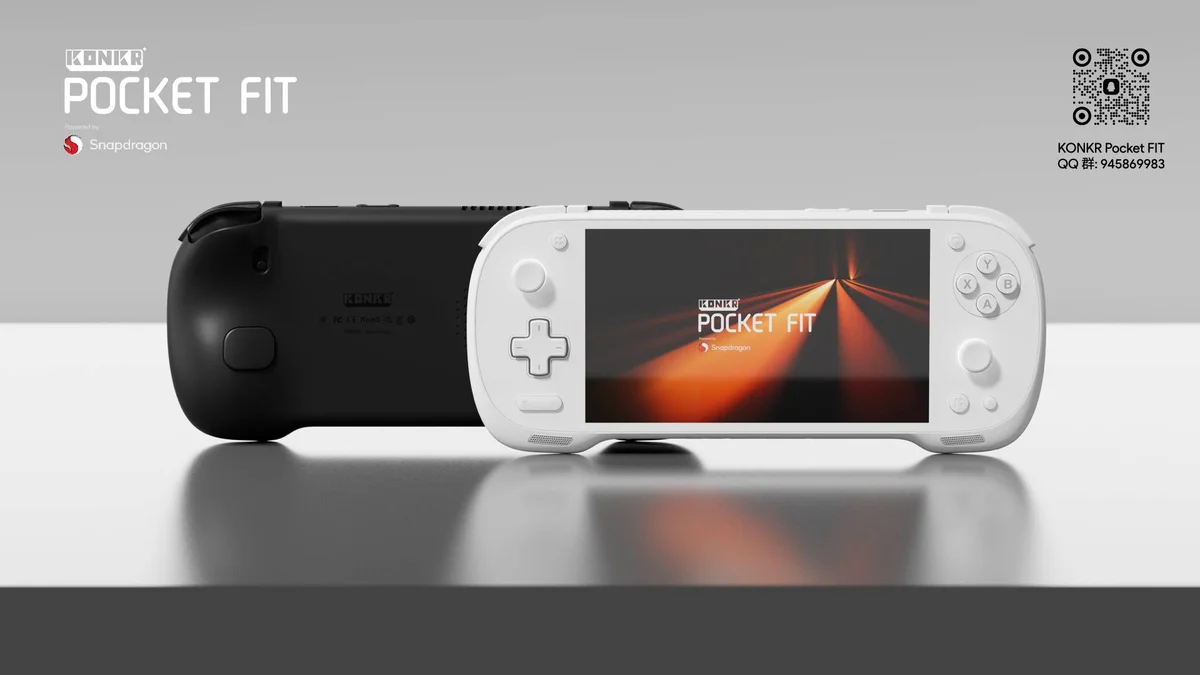
The KONKR Pocket Fit is a new entry-level Android handheld from KONKR, a budget-focused offshoot of the AYANEO team. Positioned at around $150, it targets budget-conscious gamers who want a capable emulation device without breaking the bank. Available in three colors—Phantom Black, Snow White, and Dragon Yellow—it offers an accessible entry point into Android handheld gaming (according to Retro Handhelds).
What Is the KONKR Pocket Fit?
The KONKR Pocket Fit represents a new direction for the AYANEO ecosystem. While AYANEO typically focuses on premium handhelds with price tags exceeding $500, KONKR exists to serve the budget market with devices that prioritize value over cutting-edge specifications.
This device sits in a crowded but important segment of the handheld market—sub-$200 Android devices that can handle retro emulation up through PlayStation 2 and some Nintendo Switch titles. For newcomers to handheld emulation or those who want a secondary device for travel, the Pocket Fit presents an intriguing option.
The Pocket Fit distinguishes itself from KONKR's higher-end offerings. Notably, KONKR also produces a Snapdragon 8 Elite version of the Pocket Fit, which has already been stated by AYANEO as likely to be discontinued due to compatibility issues with emulation drivers (according to Retro Handhelds). The G3 Gen 3 version discussed here remains the focus for budget buyers.
Key Specifications and Features
The KONKR Pocket Fit's hardware reflects its budget positioning while still offering competent performance for the price:
| Component | Specification |
|---|---|
| CPU | Qualcomm Snapdragon G3 Gen 3 |
| Display | 5.5-inch LCD, 1440×720, 16:9 aspect ratio |
| RAM | 4GB / 6GB / 8GB LPDDR4X options |
| Storage | 64GB / 128GB UFS 2.2 with microSD expansion |
| Battery | 6000mAh |
| Connectivity | Wi-Fi 5, Bluetooth 5.0, USB-C, 3.5mm headphone jack |
| Controls | Hall Effect analog sticks, face buttons, D-pad, shoulder buttons |
| OS | Android 14 |
| Price | Starting at approximately $150 |
The Qualcomm Snapdragon G3 Gen 3 is an entry-level gaming-optimized chip designed specifically for handheld devices. While it won't compete with flagship Snapdragon 8-series processors found in devices like the Retroid Pocket 6 or AYN Odin 2, it provides sufficient horsepower for emulation workloads up through the sixth console generation.
The 5.5-inch 1440×720 display offers a modest but serviceable pixel density of approximately 293 PPI. This resolution is actually well-suited for retro gaming, as many classic systems scale cleanly to 720p without requiring complex fractional scaling. The 16:9 aspect ratio accommodates PSP, GameCube, and Wii content natively, though 4:3 content will display with black bars.
The 6000mAh battery is respectable for the form factor and should provide 4-6 hours of active emulation depending on the system being emulated and screen brightness. This exceeds many competitors in the price range, which often ship with 4000-5000mAh cells.
Performance Expectations for Emulation
The Snapdragon G3 Gen 3 establishes clear expectations for what the Pocket Fit can and cannot do. Here is the realistic emulation performance you can expect:
8-bit and 16-bit Systems (NES, SNES, Genesis, Game Boy, etc.): Full speed with no issues. These systems require minimal processing power and will run flawlessly with plenty of headroom for shaders and advanced features.
PlayStation 1 and Nintendo 64: Excellent performance at native resolution with upscaling to 2x or 3x supported in most emulators. These systems are well-optimized on Android and pose no challenge for the G3 Gen 3.
Dreamcast and PSP: Very good performance overall. Most Dreamcast titles will run full speed with occasional minor hiccups in demanding games. PSP emulation via PPSSPP should handle most of the library at 2x or 3x resolution, though some demanding titles may require 1x or frame skip adjustments.
Nintendo DS and 3DS: DS emulation is flawless via melonDS or DeSmuME. 3DS emulation via Citra will run many lighter titles adequately but expect frame drops in demanding games and the inability to use high-resolution multipliers.
PlayStation 2 and GameCube: This is where expectations must be tempered. The Pocket Fit can run AetherSX2 and Dolphin, but performance will vary significantly by title. Lighter PS2 games may achieve near-full speed at native resolution, but demanding titles like Shadow of the Colossus or God of War will struggle. GameCube performance is similar—first-party Nintendo titles tend to run better than third-party ports. Expect to spend time tweaking settings per game.
Nintendo Switch: Select very light titles may run via Yuzu or Skyline, but this is not a primary use case for the device. Games like Stardew Valley or Celeste might be playable, but action-heavy titles will not meet acceptable performance thresholds.
Comparison with Budget Alternatives
The KONKR Pocket Fit enters a competitive market segment dominated by devices like the Anbernic RG35XX H and Retroid Pocket 4 Pro. How does it compare?
Versus Anbernic RG35XX H: The RG35XX H, typically priced around $80-100, runs a Linux-based system rather than Android. This limits its app ecosystem but provides a more focused emulation experience out of the box. The Pocket Fit's Android 14 offers significantly more flexibility—you can install streaming apps, cloud gaming clients, and native Android games. The RG35XX H generally provides better battery life for pure emulation workloads, but the Pocket Fit's larger battery and more powerful chip enable it to reach higher performance tiers. For users wanting a pick-up-and-play experience, the RG35XX H is simpler. For those wanting app flexibility and modern Android features, the Pocket Fit wins.
Versus Retroid Pocket 4 Pro: The Retroid Pocket 4 Pro occupies a higher price tier at approximately $199. It features the more powerful Snapdragon 865, a superior 4.7-inch AMOLED display, and significantly better build quality. The Pocket Fit undercuts it by roughly $50 but makes noticeable compromises in display quality, processing power, and storage speed. If your budget can stretch to the Retroid Pocket 4 Pro or the newer Retroid Pocket 5, those devices offer better long-term value. However, if $150 is your absolute ceiling, the Pocket Fit provides a serviceable Android experience that the Anbernic devices cannot match.
Versus AYN Odin 2 Mini: At $339, the Odin 2 Mini is not a direct competitor but worth mentioning as an aspirational comparison. The Snapdragon 8 Gen 2 in the Odin 2 Mini delivers roughly 3-4x the GPU performance of the G3 Gen 3. The Odin 2 Mini also offers a larger battery, superior build quality, and active cooling. The Pocket Fit serves as a budget entry point, while the Odin 2 Mini represents the mid-range sweet spot for serious emulation enthusiasts.
Who Should Buy the KONKR Pocket Fit?
The KONKR Pocket Fit is best suited for specific types of buyers:
First-time handheld emulation users: If you are new to Android emulation and want an affordable device to learn on without risking a $300+ investment, the Pocket Fit is a reasonable starting point. Its Android 14 installation provides access to the full suite of emulators available on the Google Play Store and sideloading capabilities.
Casual retro gamers: Players who primarily want to revisit 8-bit, 16-bit, and PlayStation 1 classics will find the Pocket Fit more than adequate. For these systems, the device provides excellent performance without the premium price tag of higher-end alternatives.
Backup or travel devices: If you already own a premium handheld like the Odin 2 or Retroid Pocket 6 but want a secondary device for travel situations where damage or theft is a concern, the Pocket Fit's $150 price point makes it less painful to replace than a $400 device.
Android app enthusiasts: Unlike Linux-based handhelds, the Pocket Fit runs full Android 14. This enables use of streaming apps like Steam Link, Moonlight, and Xbox Cloud Gaming, effectively turning it into a capable streaming handheld for PC and console games when you have reliable Wi-Fi.
If you like the KONKR brand but want the classic Game Boy Advance silhouette, watch AYANEO's newly revealed GBA-form device: our AYANEO KONKR Pocket Advance preview covers how its flat, widescreen body and higher emulation ceiling differ from the taller, gripped Pocket Fit.
Not recommended for: Serious emulation enthusiasts targeting PS2, GameCube, or Switch as primary platforms should save for a more powerful device. The G3 Gen 3 will handle these systems at a basic level but cannot provide the consistent, upscaled experience that makes handheld emulation truly compelling.
Frequently Asked Questions
What emulators work best on the KONKR Pocket Fit?
The Retro Handhelds setup guide recommends using Obtainium combined with the Obtainium Emulation Pack for automated emulator installation and updates (according to Retro Handhelds). This provides access to AetherSX2 for PS2, Dolphin for GameCube/Wii, PPSSPP for PSP, and various other emulators directly from their developers. For frontend organization, Beacon Game Launcher ($2.99), Daijisho (free), or Console Launcher (free with premium options) are recommended options.
How does the KONKR Pocket Fit compare to the G3 Gen 3 version mentioned in reviews?
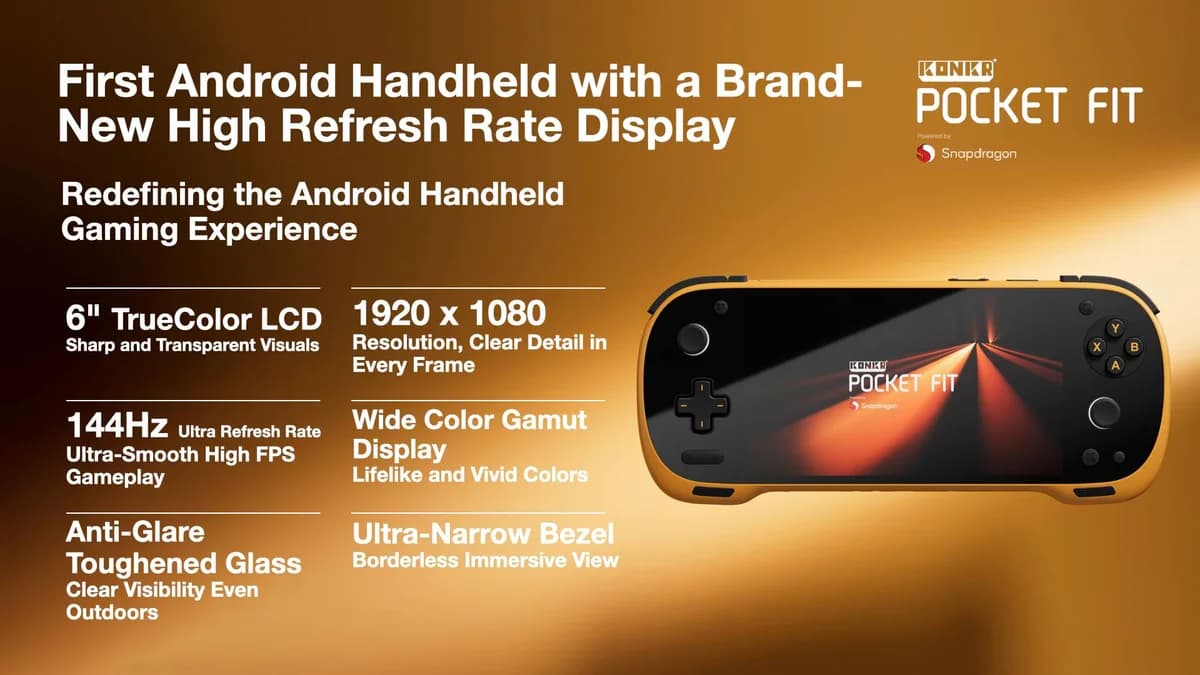
The KONKR Pocket Fit reviewed on Retro Handhelds uses the same Snapdragon G3 Gen 3 chip but features slightly different specifications—specifically a 6-inch 1080p 144Hz display and 8400mAh battery at a $299 starting price. The device covered in this article appears to be a more budget-oriented variant with reduced display specifications and battery capacity to hit the $150 price point. Performance characteristics should be similar, but the higher-end model offers better screen quality and battery life.
Can the KONKR Pocket Fit run Nintendo Switch games?
Nintendo Switch emulation via Yuzu or Skyline is technically possible on the Pocket Fit, but expectations should be limited to very light indie titles. Games like Stardew Valley, Celeste, and Dead Cells may achieve playable frame rates with configuration tweaks. However, demanding first-party Nintendo titles like The Legend of Zelda: Breath of the Wild or Super Mario Odyssey will not run at acceptable performance levels. For serious Switch emulation, devices with Snapdragon 8 Gen 2 or newer processors are strongly recommended.