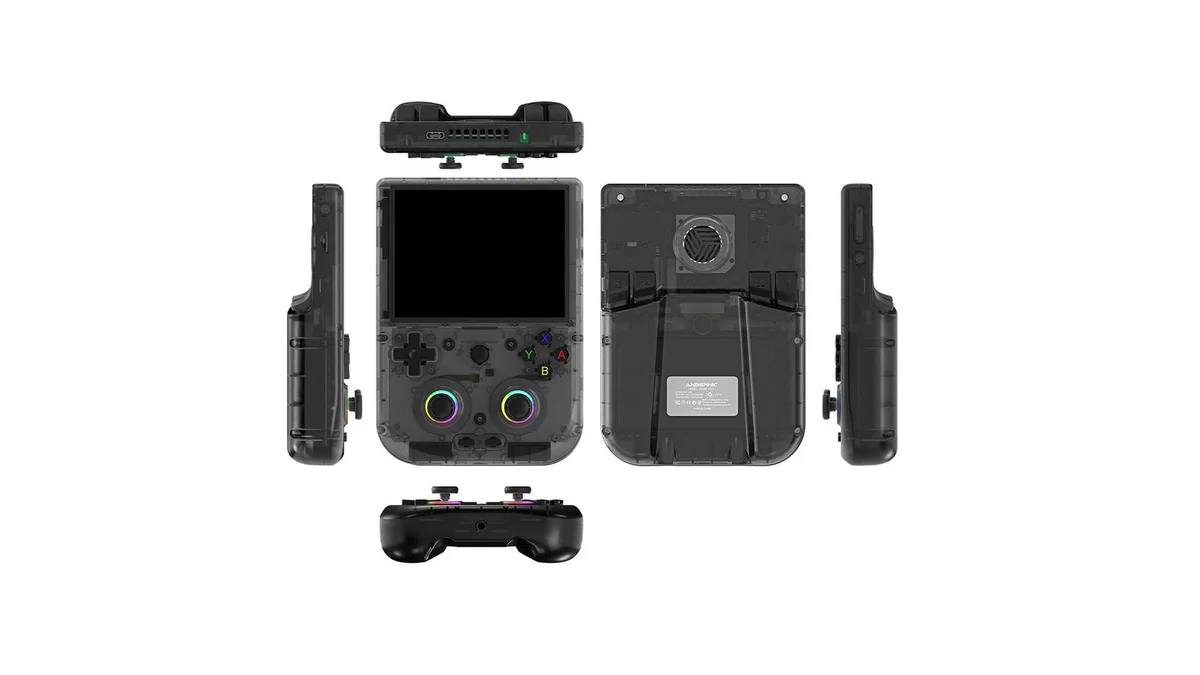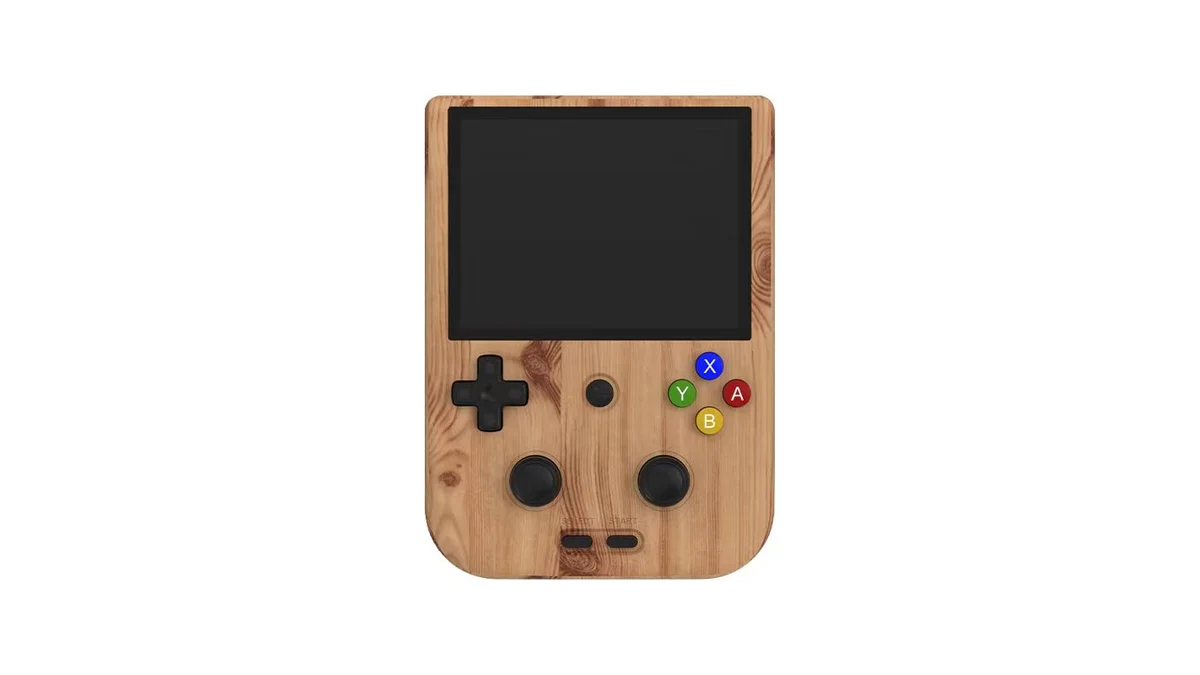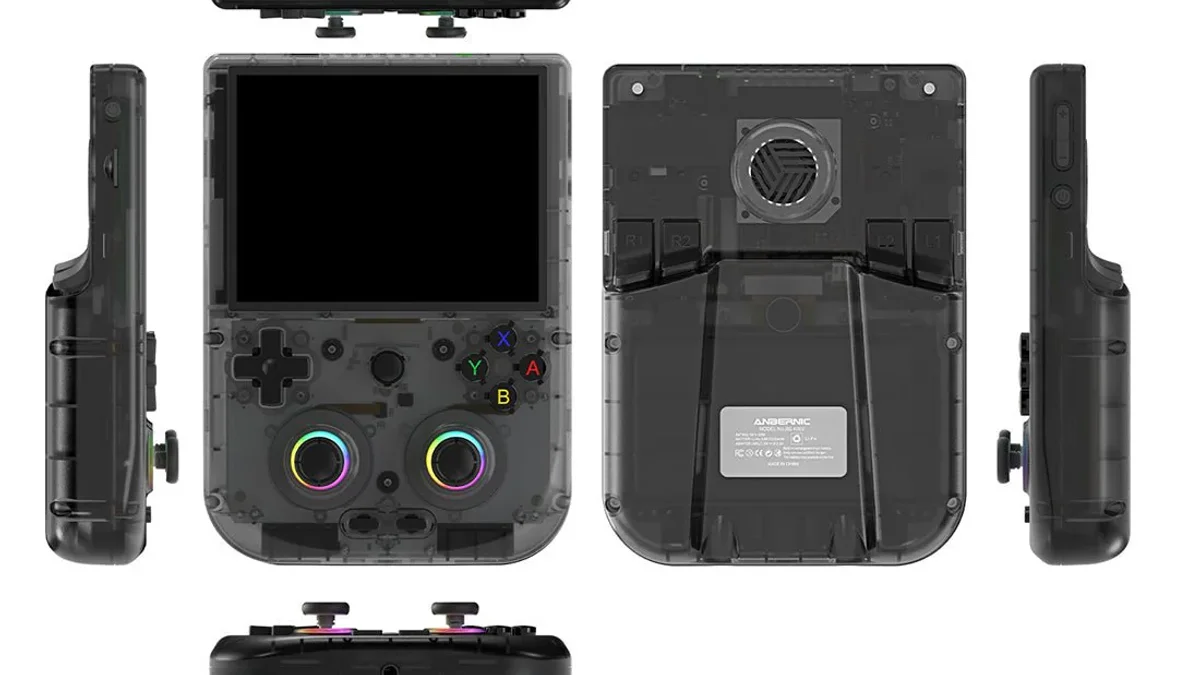
The Anbernic RG406V represents a significant evolution in vertical Android handhelds, delivering sixth-generation console emulation capabilities in a chunky yet comfortable form factor. Released in September 2024 for approximately $155-165, this device addresses nearly every shortcoming of its predecessor while carving out a unique position in the increasingly crowded retro handheld market source.
Overview and Positioning
Anbernic designed the RG406V for gamers who prioritize ergonomics and battery life over pocketability. Unlike the compact Miyoo Mini or Trimui Smart Pro, the RG406V embraces its bulk—measuring 145 × 105 × 29mm and weighing 289 grams—to accommodate adult-sized hands and a massive 5,500mAh battery. The vertical orientation places the D-pad above the action buttons in classic Game Boy style, with symmetrical analog sticks positioned for comfortable thumb reach.
This is unequivocally a device for retro gaming enthusiasts who want to play through their PlayStation 2 and GameCube backlogs without investing in flagship-priced hardware. The RG406V sits comfortably in the mid-tier—more capable than budget Linux handhelds but more affordable than Snapdragon 8-series Android powerhouses source.
Key Specifications
| Component | Specification |
|---|---|
| Display | 4-inch IPS, 960×720 (4:3), 300 PPI |
| Processor | Unisoc T820 (8-core: 1×A76@2.7GHz + 3×A76@2.3GHz + 4×A55@2.1GHz) |
| GPU | Mali-G57 MP4 @ 850MHz |
| RAM | 8GB LPDDR4X |
| Storage | 128GB UFS 2.2 + microSD up to 2TB |
| Battery | 5,500mAh (8-12 hours gaming) |
| OS | Android 13 |
| Weight | 289g |
| Extras | Hall effect joysticks, RGB lighting, 1080p video out, six-axis gyro |
The Unisoc T820 chipset marks a substantial upgrade from previous Anbernic devices. Built on a 6nm process, this 5G-capable SoC delivers roughly 50% better CPU performance than the T618 found in the RG405V, while the Mali-G57 MP4 GPU provides significantly improved graphics throughput for emulation source.
Display and Form Factor
The 960×720 resolution on a 4-inch panel yields an impressive 300 PPI—sharp enough that pixel structure disappears at normal viewing distances. The 4:3 aspect ratio proves ideal for retro content, offering perfect integer scaling for 240p and 480p consoles without letterboxing or stretching. Reviewers have called this "the best screen Anbernic has released yet," praising its vibrant color reproduction and excellent viewing angles source.
The form factor polarizes opinions. The bulbous, chunky design appears awkward in photos but translates to exceptional comfort during extended sessions. Textured rear grips prevent slipping, and the substantial thickness (29mm) allows natural hand positioning without cramping. However, pocketability suffers—this is a bag or jacket-pocket device, not a jeans-pocket companion.
Performance and Emulation Capabilities
The RG406V handles sixth-generation emulation with remarkable competence. GameCube titles like NBA Street Vol. 2 maintain locked 60fps at 1x resolution, with 2x upscaling achievable on many games using Dolphin's High CPU mode. PlayStation 2 emulation via NetherSX2 runs the majority of the library at full speed with 1.5x resolution scaling, though some demanding titles require native resolution to maintain stable frame rates source.
| System | Performance |
|---|---|
| 8/16-bit | Flawless with shaders and filters |
| PS1/N64/DC | Full speed with upscaling |
| PSP | 2x resolution, consistent 60fps |
| GameCube/Wii | 1x-2x resolution, 85% compatibility |
| PS2 | 1x-1.5x resolution, 76% compatibility |
| Nintendo 3DS | Playable on many titles |
The Hall effect analog sticks represent a meaningful quality-of-life improvement. Unlike the potentiometer-based sticks on cheaper handhelds, these offer consistent 360-degree movement without cardinal snapping or drift concerns. The tall stick profile excels for 3D platformers but can feel awkward during dual-stick shooter segments. The D-pad has received particular praise—reviewers compare it favorably to the acclaimed Vita-style pads, calling it "the best non-Vita-style D-Pad I have used" source.
A notable limitation: the shoulder buttons are digital only, not analog triggers. This proves frustrating for PS2 racing games and GameCube titles requiring variable pressure input. Additionally, their side-by-side placement and high sensitivity lead to accidental presses during intense gameplay.
Battery Life
The 5,500mAh battery delivers exceptional endurance. Real-world testing demonstrates 8-12 hours depending on workload—lightweight 8-bit emulation pushes toward the 12-hour mark, while intensive GameCube gaming with active cooling still achieves over 8 hours. Android's sleep mode proves remarkably efficient, with minimal drain overnight. Full charging via 5V/2A input requires approximately 3.5 hours source.
Comparison to RG405V and Alternatives
| Feature | RG406V | RG405V | Retroid Pocket 4 Pro |
|---|---|---|---|
| Processor | Unisoc T820 | Unisoc T618 | MediaTek Dimensity 1100 |
| RAM | 8GB | 4GB | 8GB |
| Display | 960×720 (300 PPI) | 640×480 (200 PPI) | 1334×750 |
| Storage | UFS 2.2 | eMMC | UFS |
| Max Emulation | PS2/GC | Saturn | PS2/GC/Switch |
| Price | ~$155-165 | ~$130 | ~$200 |
Upgrading from the RG405V delivers meaningful improvements: 50% more processing power, 125% higher display resolution, double the RAM, and significantly faster UFS storage. The RG406V also shaves 6mm off the thickness while adding 7 grams. For the $25-35 price premium, the upgrade proves worthwhile for anyone targeting sixth-generation emulation source.
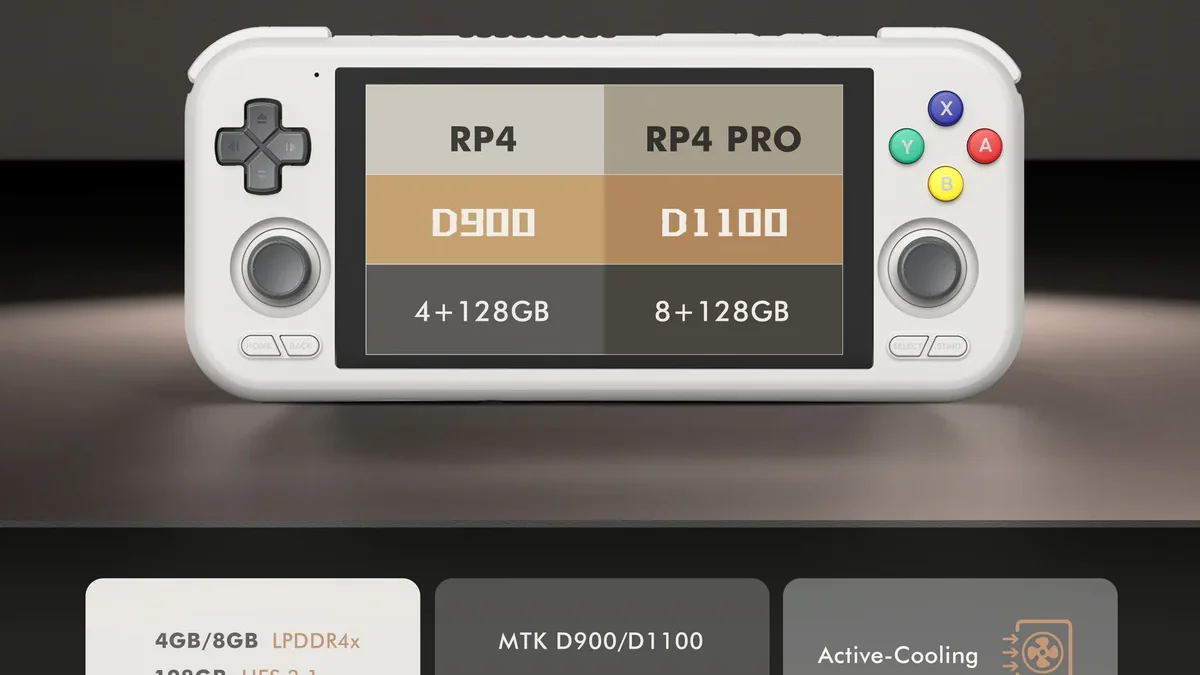
Alternatives worth considering include the Retroid Pocket 4 Pro ($200) for superior performance and the AYN Odin 2 Mini ($339) for flagship Snapdragon 8 Gen 2 power. However, neither offers the vertical form factor. For those committed to the portrait orientation, the RG406V currently dominates its category.
FAQ
Q: Can the RG406V play Nintendo Switch games? A: Limited Switch emulation is possible through Skyline or Yuzu forks, but expect significant compatibility issues and performance drops. The T820 handles 2D Switch titles adequately but struggles with 3D releases. Consider this a bonus capability rather than a primary selling point source.
Q: Does the vertical form factor work for streaming modern games? A: Technically yes—Moonlight PC streaming and XBPlay Xbox streaming function perfectly. However, the vertical layout proves uncomfortable for modern shooters and competitive multiplayer titles designed for landscape orientation. The RG406V excels for retro content and casual streaming, but landscape handhelds remain superior for contemporary gaming source.
Q: Should I upgrade from an RG405V? A: If you primarily play 8-bit through Dreamcast content, the RG405V remains sufficient. Upgrade to the RG406V if you want PS2/GameCube capability, sharper display, or significantly improved battery life. The $25-35 price difference delivers substantial value for sixth-generation emulation.
Verdict
The Anbernic RG406V successfully targets a specific niche: gamers with larger hands who want comfortable sixth-generation emulation without flagship pricing. The chunky design prioritizes ergonomics over aesthetics, the Hall effect sticks eliminate drift concerns, and the exceptional battery life enables marathon sessions. While digital shoulder buttons and the polarizing form factor create minor friction, the overall package delivers outstanding value at $155-165.
Rating: 8.5/10 — The definitive vertical handheld for PS2 and GameCube enthusiasts.
Sources
- Retro Handhelds RG406V Review
- Anbernic Official Product Page
- Retro Catalog RG406V vs RG405V Comparison
- GBAtemp Launch Announcement
- Reddit User Reviews and Comparisons