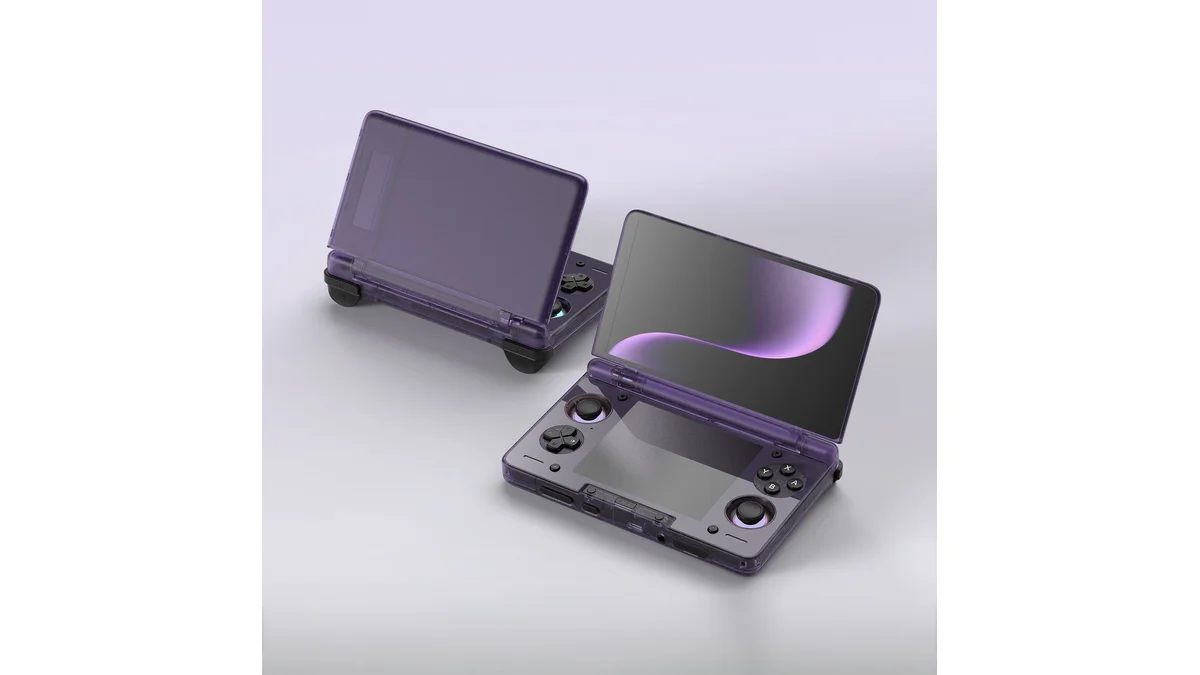
Update September 14, 2026: The RG DS Plus is listed at $84.99 / $94.99 with sales opening September 15. It is the Linux dual-screen successor, not a more powerful RG DS. Original RG DS remains $94.99 Android.
Update September 7, 2026: Anbernic revealed the RG DS Plus with dual 4.3-inch 1024x768 panels, a built-in stylus slot, and the same RK3568.
Update April 27, 2026: the Anbernic RG DS is no longer just a rumor. Anbernic now lists the RG DS on its official store at $94.99, with dual 4-inch IPS screens, Android 14, RK3568, 3GB RAM, 32GB storage, stylus support, and a 4000mAh battery (according to Anbernic's official RG DS page).
That changes the buying advice completely. The RG DS is not a premium AYN Thor competitor. It is a budget DS-style Android handheld that exists to make dual-screen emulation cheap.
What Is the Anbernic RG DS?
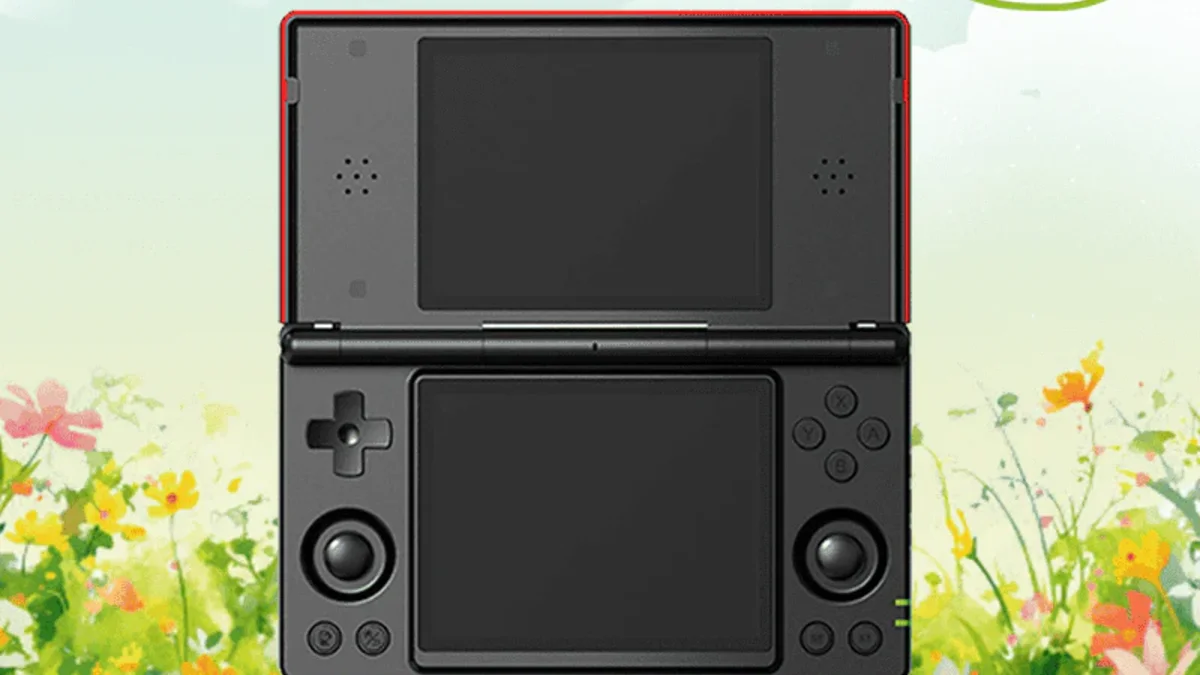
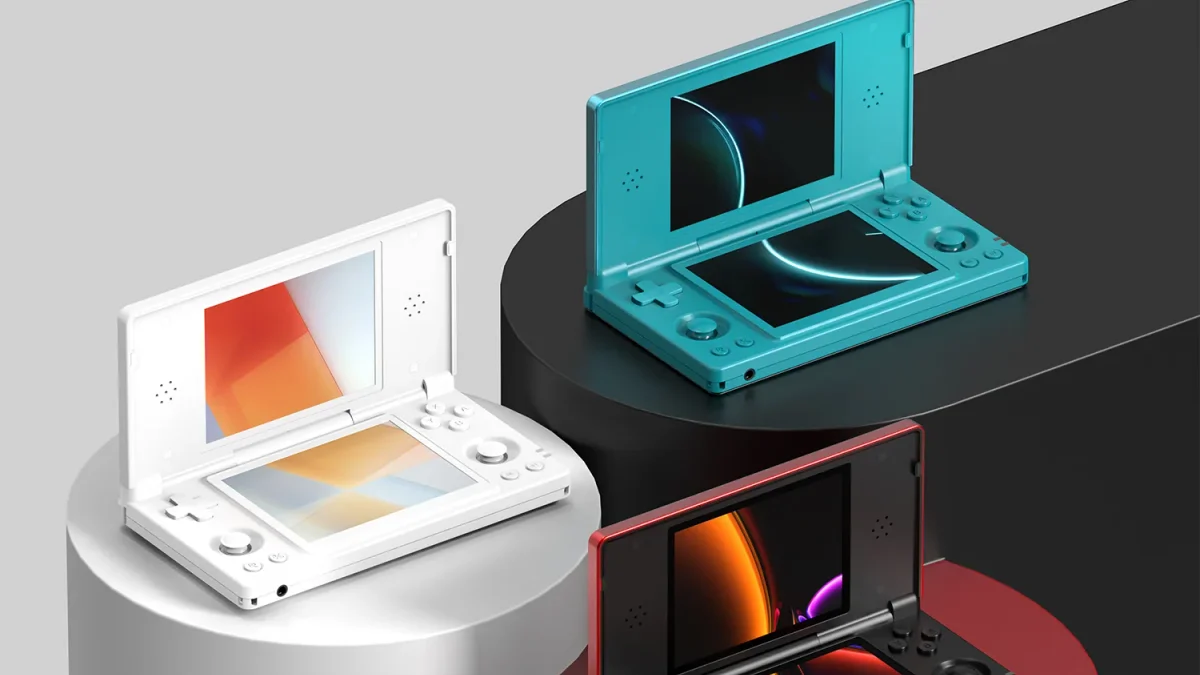
The Anbernic RG DS is a clamshell dual-screen handheld built around two 4-inch IPS displays. It ships with Android 14, includes a capacitive stylus in the box, and uses a Hall magnetic switch so the device can sleep when the lid closes.
| Spec | Anbernic RG DS |
|---|---|
| Price | $94.99 sale price |
| Screens | Dual 4-inch IPS, OCA full lamination, multi-touch |
| Resolution | 640x480 |
| CPU | RK3568 quad-core Cortex-A55 up to 2.0GHz |
| GPU | ARM G52 2EE |
| RAM / Storage | 3GB RAM + 32GB storage |
| OS | Android 14 |
| Battery | 4000mAh, rated up to 6 hours |
| Weight | 321g |
| Expansion | TF card up to 2TB |
The RG DS is clearly aimed at Nintendo DS nostalgia, GBA, older retro systems, Android apps, streaming, and light multitasking. It is not built for PS2, GameCube, or Switch buyers.
The Big Change: It Runs Android 14, Not Linux
Earlier leaks made the RG DS interesting because it looked like it might ship with Linux. The official product page confirms Android 14 instead. That is a trade-off, not automatically a failure.
Android gives the RG DS broader app compatibility, easier streaming, easier file management, and access to Android emulators. Linux might have delivered a cleaner console-style interface, but Android makes more sense for Anbernic's split-screen app promises and AI tools.
Anbernic lists dual-app split-screen features, quick key-focus switching between upper and lower screens, wireless screen projection, and AI features like one-click game guide retrieval, real-time translation, and intelligent dialogue (according to Anbernic).
Real Customer Review Signals
The most useful new data is customer feedback. Anbernic's product page shows a 4.6/5 average rating from 57 reviews as of this update. One verified buyer wrote that DS emulation is almost flawless, while another praised build quality, buttons, and hinge feel but called out setup difficulty and possible speaker buzzing (according to Anbernic's review section).
That is exactly the pattern to expect from a $94.99 Android handheld: impressive hardware for the price, but setup and polish are not on the same level as premium devices.
What Can the RG DS Emulate?
The RG DS should be treated as a DS, GBA, PS1, 16-bit, arcade, and lightweight Android machine. The RK3568 is a known low-power chip, and Anbernic advertises support for 20+ emulator types rather than flagship-class performance.
| System | Expected Result | Notes |
|---|---|---|
| Nintendo DS | Strong | The dual screens and stylus are the reason to buy it |
| Game Boy / GBA | Excellent | Ideal for handheld classics |
| NES / SNES / Genesis | Excellent | Plenty of headroom |
| PS1 | Good | Should be comfortable for most titles |
| Dreamcast / N64 | Mixed | Game-by-game tuning likely required |
| PSP | Limited | 3GB RAM and RK3568 set a ceiling |
| PS2 / GameCube / 3DS | Not recommended | Buy AYN Thor, AYANEO Pocket DS, or Odin-class hardware instead |
The search query "Anbernic RG DS PS2" is already showing up in related searches. The answer is simple: do not buy this for PS2. Buy it for DS.
Anbernic RG DS vs AYN Thor vs AYANEO Pocket DS
The RG DS wins on price. The Thor and Pocket DS win on power, screen quality, and upper-end emulation.
| Device | Price Class | Best For | Skip If |
|---|---|---|---|
| Anbernic RG DS | $94.99 sale price | Cheap DS and retro handheld play | You want PS2, 3DS, or premium build |
| AYN Thor | $249+ | Dual-screen emulation with more power | You only need DS/GBA |
| AYANEO Pocket DS | $399+ launch/backer range | Premium Android dual-screen multitasking | You want budget value |
This is why the RG DS matters. It gives casual players a dual-screen option at a price where the quirks are easier to forgive.
Should You Buy the RG DS?
Buy the Anbernic RG DS if you want a cheap, dedicated-feeling DS-style handheld for bed, travel, nostalgia, and retro gaming. The dual 4-inch screens, included stylus, Android 14, and 321g weight make it much more purpose-built than using a phone with a controller.
Skip it if you expect a modern 3DS replacement, PS2 emulation, high-end Android gaming, or perfect plug-and-play polish. The RG DS is exciting because it is cheap and specialized, not because it is powerful.
Frequently Asked Questions
Is the Anbernic RG DS worth it?
The Anbernic RG DS is worth it if you want a budget dual-screen handheld mainly for DS, GBA, PS1, and older retro games. At $94.99, it is much cheaper than AYN Thor or AYANEO Pocket DS, but it is also far less powerful.
What is the Anbernic RG DS price?
Anbernic lists the RG DS at a $94.99 sale price on its official product page. Pricing can change by shipping warehouse, SD card bundle, and promotion, so check the official store before buying.
Does the Anbernic RG DS run Linux or Android?
The official Anbernic RG DS runs Android 14. Earlier rumors suggested Linux, but Anbernic's product page lists Android 14, split-screen Android features, and app-focused functions.
Can the Anbernic RG DS play PS2 or 3DS games?
The RG DS is not a good PS2 or 3DS handheld. Its RK3568 chip and 3GB RAM are better suited for DS, GBA, PS1, 16-bit systems, and lighter Android apps. For PS2 or 3DS, look at AYN Thor, AYANEO Pocket DS, Retroid Pocket 6, or Odin-class devices.
Does the Anbernic RG DS include a stylus?
Yes. Anbernic lists a capacitive stylus in the box along with the RG DS console, USB-C charging cable, screen protector, user manual, lanyard, and color box.
Sources
- Anbernic - RG DS official product page
- Anbernic - RG DS Plus first look
- Handheld Finder - RG DS Plus announcement
- Retro Handhelds - Earlier RG DS coverage
- Joey's Retro Handhelds - RG DS Linux rumor coverage
Featured image: Anbernic official product imagery. Product images used under fair use for editorial purposes.